Nutrition · 4 min read ·
You eat as you always have and your body responds differently. Where to start if you want to feel at home in it again.
If you have 30 seconds
- 1At the menopause, fat moves to your middle and you lose muscle faster.
- 2Eating even less makes it worse, because it costs you more muscle.
- 3Start with strength training, protein at every meal, sleep and less alcohol.
You're around fifty, and for months your suit jacket has been tight at the waist. Menopause weight gain tends to arrive like this. You eat what you always have, the scales have barely moved, and the shape isn't yours any more.
I often hear it from the women I work with, managers and business owners. 'I'm doing what I've always done and it's stopped working.' I believe them. It's the body that's changing.
How your body changes during the menopause
The changes start before your last period, often in your forties.
- Your waist. Fat leaves your hips and thighs and moves to your middle. During the menopause, a bigger waist matters more than the scales.
- Your tone. Arms and legs feel less firm, even at the same weight.
- Your sleep. You drop off, then wake in the small hours, often with a hot flush.
Why do you gain weight during the menopause when you eat the same?
Because as oestrogen falls, your body tends to lose muscle and store fat round your middle. The plate is the same, but you're often sleeping worse and stress takes more out of you.
You lose muscle faster. Oestrogen helps muscle repair and recover after effort, and now it's falling. Muscle gives you strength and shape, protects your bones and helps your body deal with sugar.
Stress hits harder. Oestrogen helps keep your stress response in check. As it falls, the same high-pressure day can push cortisol higher, and over time that encourages fat to settle round your waist.
Broken nights make you hungrier. Short sleep raises your hunger hormone and lowers the one that says you're full. The next day you want bread and sweet things, and willpower has little to do with it.
At fifty, muscle is an asset worth protecting.
What you can do
Train for strength, with proper loads. Two sessions a week. After the menopause, it's the training with the best evidence for muscle and bone. When two groups of postmenopausal women with fragile bones were compared, those lifting heavy weights twice a week, always under supervision, had on average gained bone density in the spine after eight months. The others had lost a little. And you won't bulk up. A woman has about twenty times less testosterone than a man.
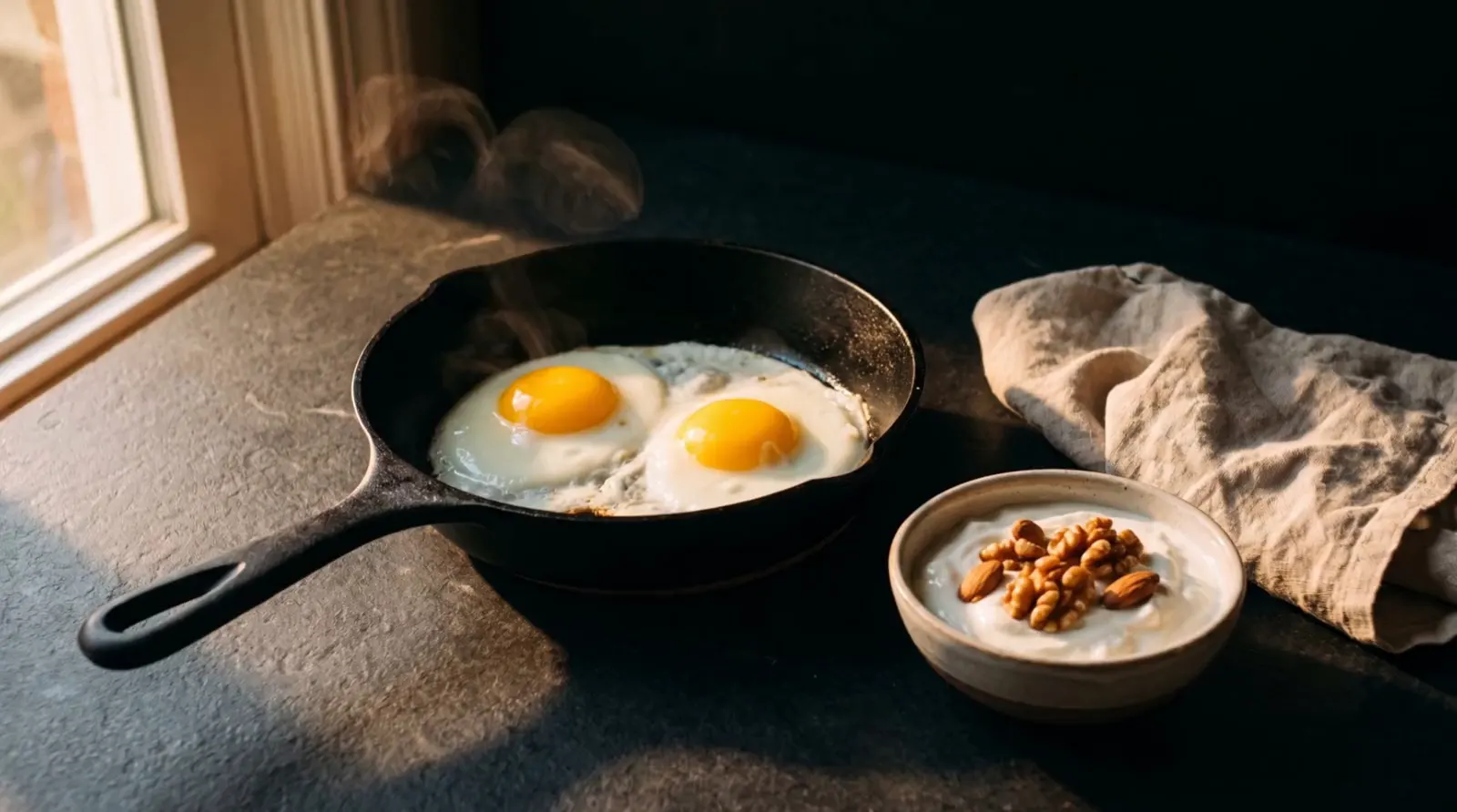
Protein at every meal. 1.6 to 2.2 grams per kilo of body weight a day, 20 to 40 per meal, breakfast included. On its own it builds nothing. It needs the weights. And don't cut back any further. You'd lose more muscle.
Protect your sleep. Same wake-up time every day, daylight in the morning, bedroom between 18 and 20 degrees. A cool room helps with hot flushes too. Last coffee straight after lunch.
Keep alcohol for occasions. An evening drink breaks up the second half of the night, just when you're already waking.
Let the stress out, and walk. When tension builds, take two breaths in through your nose, the second short, then a long breath out through your mouth. One to three times. Walk for ten to fifteen minutes after meals, so working muscles take up the sugar that's just arrived. Aim for seven to eight thousand steps a day.
Try this
0 of 5 done
Your ticks are saved on this device.
Test yourself
Your waist is growing and you have three free hours a week. How do you use them?
Start with strength. This week, book a first session with a trainer who'll teach you the movements. Next week, add protein at breakfast.