Nutrition · 4 min read ·
Cutting out eggs rarely does much. The whole plate counts, and so does how you spend your day.
If you have 30 seconds
- 1Your body makes most of your cholesterol, so the whole plate matters more than any single food.
- 2Pulses, oats, vegetables, olive oil and oily fish in; biscuits, pastries and fried food out.
- 3Your numbers, target and treatment are your doctor's call. What you eat works alongside.
You open your blood results on your phone between meetings. All fine, apart from high cholesterol. What to eat from tonight, and what to cut? Before you've spoken to your GP you've decided: no more eggs or cheese, and toast and jam for breakfast.
Nearly everyone does this, and it rarely shifts much. Here's what you can change yourself, on your plate and in your day. The numbers, the target and any treatment are for your doctor.
What to avoid, and what to keep
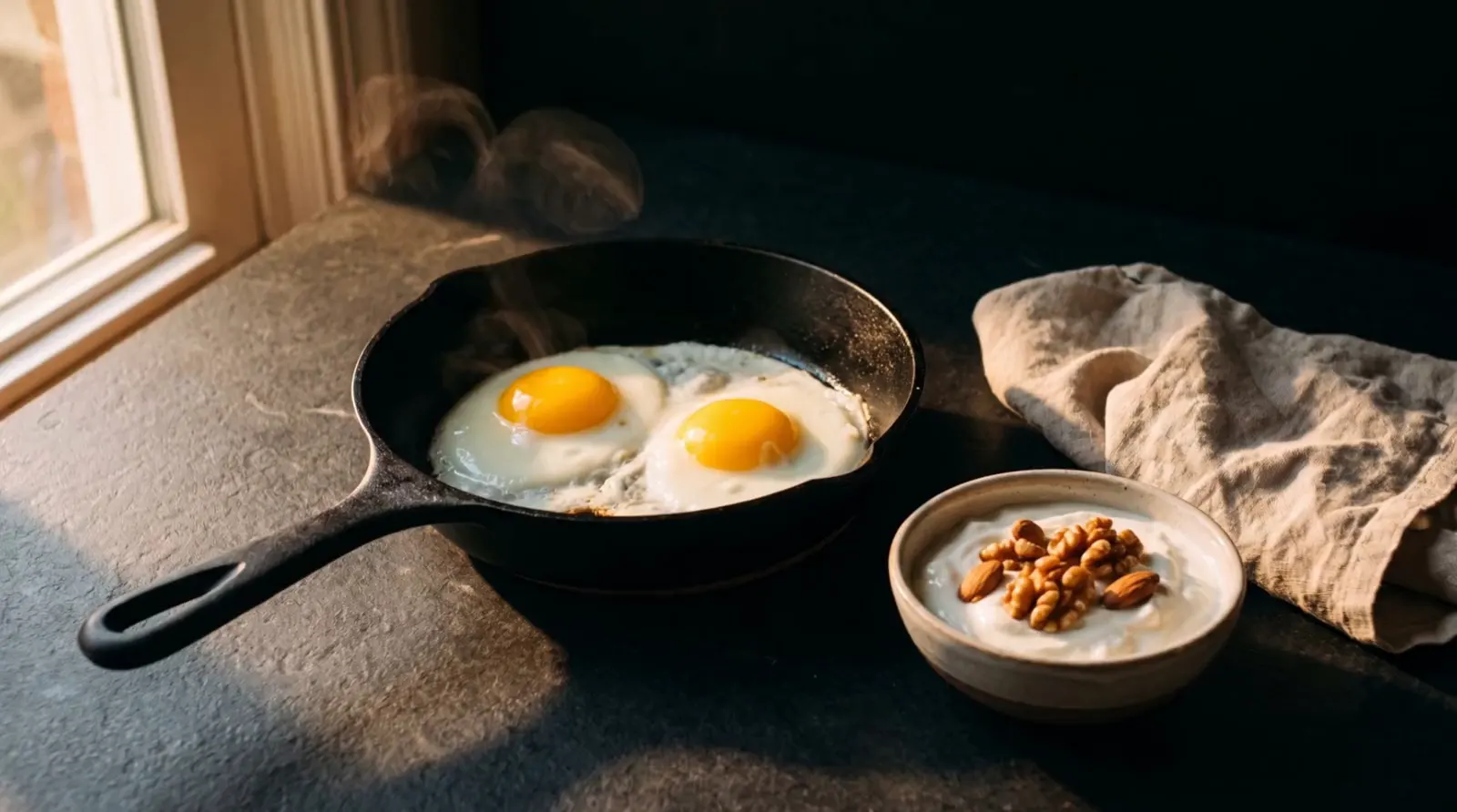
People looking up foods to avoid with high cholesterol tend to start with the wrong one. Eggs can usually stay, with vegetables and no bacon on the side; ask your doctor how many a week. Other things need to stop being everyday food.
- Shop-bought biscuits, cakes and pastries. Margarine and factory-made ice cream too. If the label says 'hydrogenated fat', put it back.
- Fried food and takeaways. Especially where the oil gets reused.
- Processed meats. Bacon, sausages, salami: for occasions, not every day.
- Full-fat cheese and whole milk. Now and then, in small portions.
Where your cholesterol comes from
Around four fifths of the cholesterol in your blood is made by your body, mainly the liver. Food supplies the rest. That's why cutting out one food usually changes little. Everything you eat, and how you live, carries more weight.
The type of fat. You've seen the ones to cut back. Those in extra virgin olive oil and oily fish stay. In the Mediterranean diet studied in the 1950s, fat supplied about 30 per cent of the calories, and up to 40 in Crete.
Sugar and white flour. Too much pushes up insulin, one of the signals that can tell your liver to make more cholesterol. So swapping eggs for toast and jam rarely helps.
What you add to your plate matters as much as what you take away.
High cholesterol: what should you eat?
Vegetables, pulses or oats and extra virgin olive oil every day; oily fish several times a week. They bring soluble fibre and good fats, the two things you can add yourself.
Pulses, oats, barley. Their soluble fibre forms a gel in your gut that binds some bile acids and carries them out. Your liver makes those acids from cholesterol, so to replace them it uses a little more. Aim for 20 to 30 grams of fibre a day. Less does little, and more may mean you absorb fewer minerals. Build up gradually to avoid bloating.
Olive oil and oily fish. Use the oil uncooked. Sardines, mackerel or salmon instead of processed meat and cheese.
Movement, for months. People who sit all day tend to have lower 'good' cholesterol. Do aerobic exercise several days a week: brisk walking, cycling, swimming. Keep it up for around three months and blood fats tend to improve, if only a little. Add a ten to fifteen minute walk after meals and two strength sessions a week.
Try this
0 of 5 done
Your ticks are saved on this device.
Test yourself
Your results show high cholesterol. What's your first move?
Take the results to your GP. Tonight, in the meantime, start with your plate.